PageWarden vs OneUptime
A focused OneUptime alternative
OneUptime is a broad, open-source observability platform: monitoring alongside logs, traces, metrics and incident management, self-hostable or managed. Teams look for an alternative when they simply need reliable external monitoring without standing up and running a full platform. PageWarden is that focused, managed tool.
Signups are paused while we prepare the full launch.
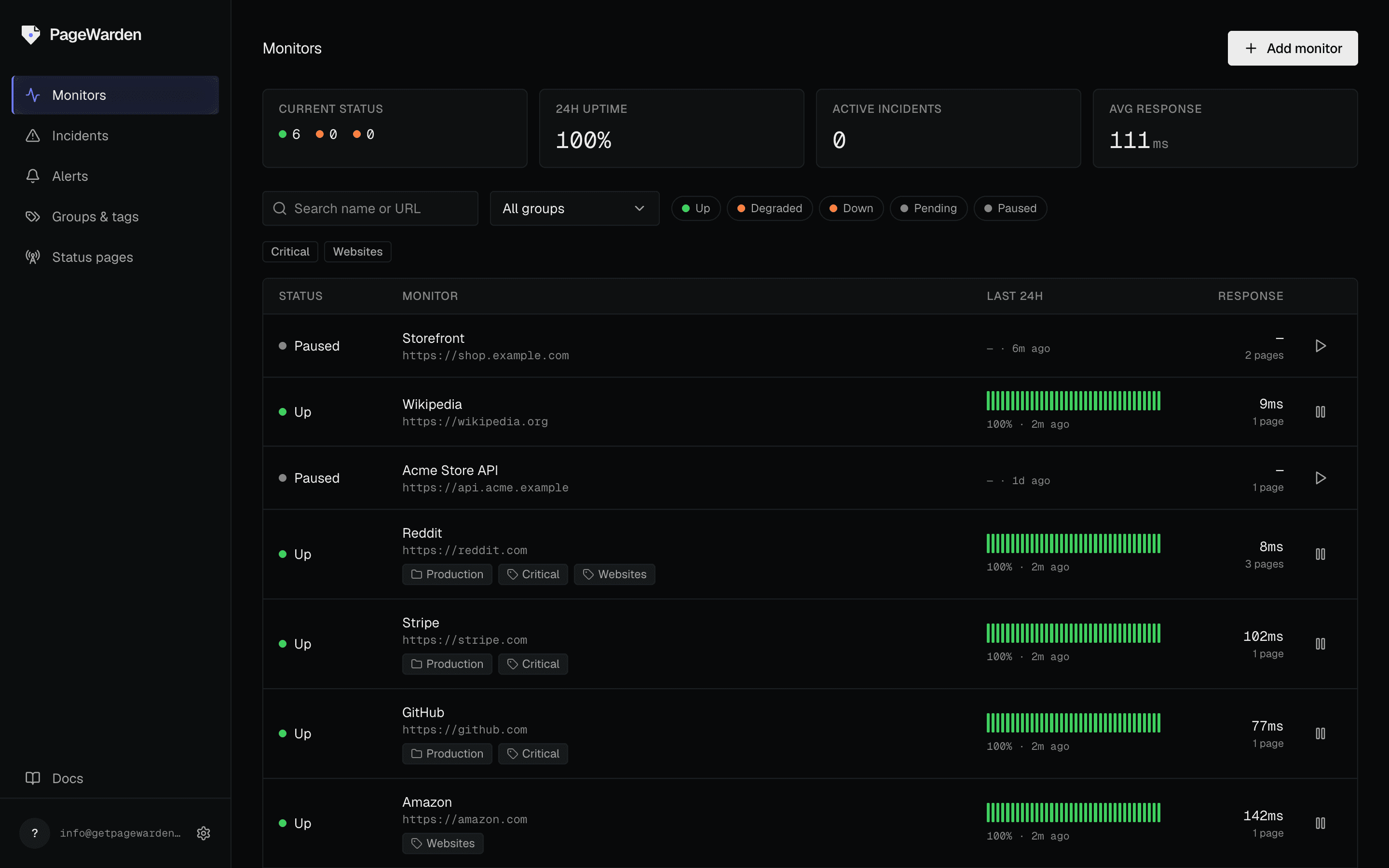
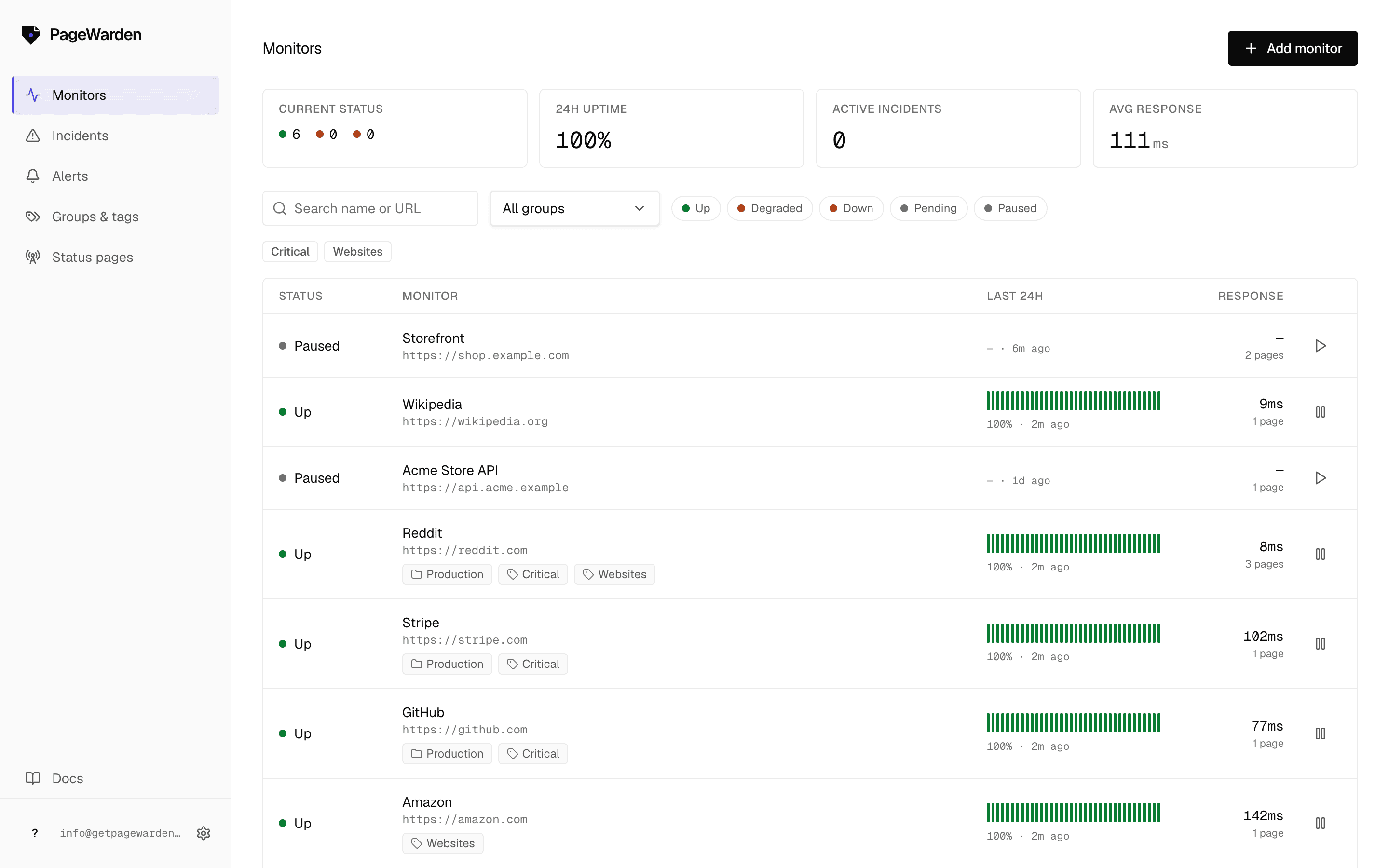
At a glance
Switch to PageWarden if
you need dependable external monitoring first, not a full observability platform to instrument and run.
Stay with OneUptime if
you want an all-in-one open-source platform with logs, traces and metrics under one roof.
See why teams switch from OneUptime
Signups are paused while we prepare the full launch.
By the numbers
How PageWarden and OneUptime stack up
How we score
- Check breadth
- Number of native check types offered in one monitor (uptime, SSL, domain, keyword, port, DNS, ping and the like).
- Check speed
- Fastest check interval available: 30 seconds or faster scores highest, 60 seconds next, then 5-minute and slower tiers.
- Multi-region
- From single-location checks (low) to multi-region checks, up to a confirmed multi-region vote before paging (high).
- Diagnosis
- Whether incidents carry an automated plain-English root-cause hypothesis. Most tools do not, and score low here.
- Status pages
- From no status pages, to a paid add-on, to branded public status pages included from the free plan.
- Value
- A genuinely free plan and flat, predictable pricing versus per-seat, per-monitor or credit-based models.
| Dimension | PageWarden | OneUptime |
|---|---|---|
| Check breadth | 5 | 5 |
| Check speed | 4 | 4 |
| Multi-region | 5 | 3 |
| Diagnosis | 5 | 4 |
| Status pages | 5 | 4 |
| Value | 5 | 3 |
- PageWarden Starter$29/mo50 monitors, 60-second checks
- OneUptime (usage)~$72/moAbout 50 active monitors at $1 each, plus the $22 Growth plan
OneUptime's plans and pricing change over time. Check their current pricing page before you decide.
Head to head
PageWarden vs OneUptime
| Feature | PageWarden | OneUptime |
|---|---|---|
| Seven check types in one monitor | Yes | Yes |
| 60-second checks | Yes | Yes |
| Multi-region confirmation before paging | Yes | Partial7 locations; vote not documented, self-host is single |
| Plain-English root-cause on every incident | Yes | PartialLLM incident analysis, billed per token |
| Public status pages included | Yes | Yes |
| White-label status pages and custom domain | Yes | YesCustom branding on the Growth and Scale plans |
| Outages grouped into one incident | Yes | Yes |
| Genuinely free plan, no credit card | Yes | PartialFree platform, but active monitors are billed |
| Flat pricing, no per-seat fees | Yes | NoUsage-based per monitor, plus AI tokens |
| Dimension | PageWarden | OneUptime |
|---|---|---|
| Check types | All seven checks in one monitor: uptime, SSL, domain, keyword, port, DNS and ping | Full observability platform: monitoring plus logs, traces, metrics and incident management |
| Multi-region | Failures re-checked from several regions and voted on before you are paged; continuous per-region scanning on Starter and Pro | Checks from multiple locations within the platform |
| Root-cause diagnosis | A plain-English root-cause hypothesis on every incident, on Starter and Pro | A broad platform with its own AI agent, priced separately |
| Pricing model | Flat monthly tiers, a genuinely free plan, and no per-seat fees | Subscription tiers plus per-monitor and usage-based add-ons; self-hosting is an option |
| Free tier | Free: three monitors with uptime, SSL and domain checks, no credit card | Open-source and self-hostable, or a managed plan |
Why teams choose PageWarden
What you get with PageWarden
Everything in one monitor
Uptime, SSL, domain expiry, keyword, port, DNS and ping in one tool instead of stitching several together, with SSL and domain coverage included on every website monitor.
Failures confirmed from multiple regions
PageWarden re-checks a failure from several regions and takes a vote before it opens an incident, so a brief local network blip never pages you. Single-location checks are the main cause of false downtime alerts.
A plain-English read on what broke
When an incident opens, PageWarden adds a short hypothesis about the likely cause on Starter and Pro, so you start from a lead instead of a blank page.
Fair, predictable pricing
A genuinely free plan with no credit card, then flat monthly tiers as you scale, with no per-seat surprises. Annual billing works out to two months free.
Try PageWarden on the free plan
Three monitors with uptime, SSL and domain checks. No credit card.
Signups are paused while we prepare the full launch.
Monitoring without the platform overhead
OneUptime aims to replace an entire observability stack, which is powerful and a lot to run. Many teams do not need traces or per-gigabyte log ingestion, they need to know their sites, certificates and DNS are healthy. PageWarden does exactly that: all seven checks, multi-region confirmation and a plain-English diagnosis, as a managed service with nothing to instrument.
Questions
PageWarden vs OneUptime, answered
Is OneUptime still the right pick?
OneUptime is a capable open-source observability platform, and the right choice if you want logs, traces, metrics and monitoring in one system you control. If you need dependable external monitoring without the platform overhead, PageWarden is the focused, managed alternative.
OneUptime's features and pricing change over time. Check their current site for the latest details before you decide.
Switching from OneUptime? Start free in two minutes.
Signups are paused while we prepare the full launch.